Faith
Belief, doubt and the complex relationship between spiritual meaning and personal freedom.
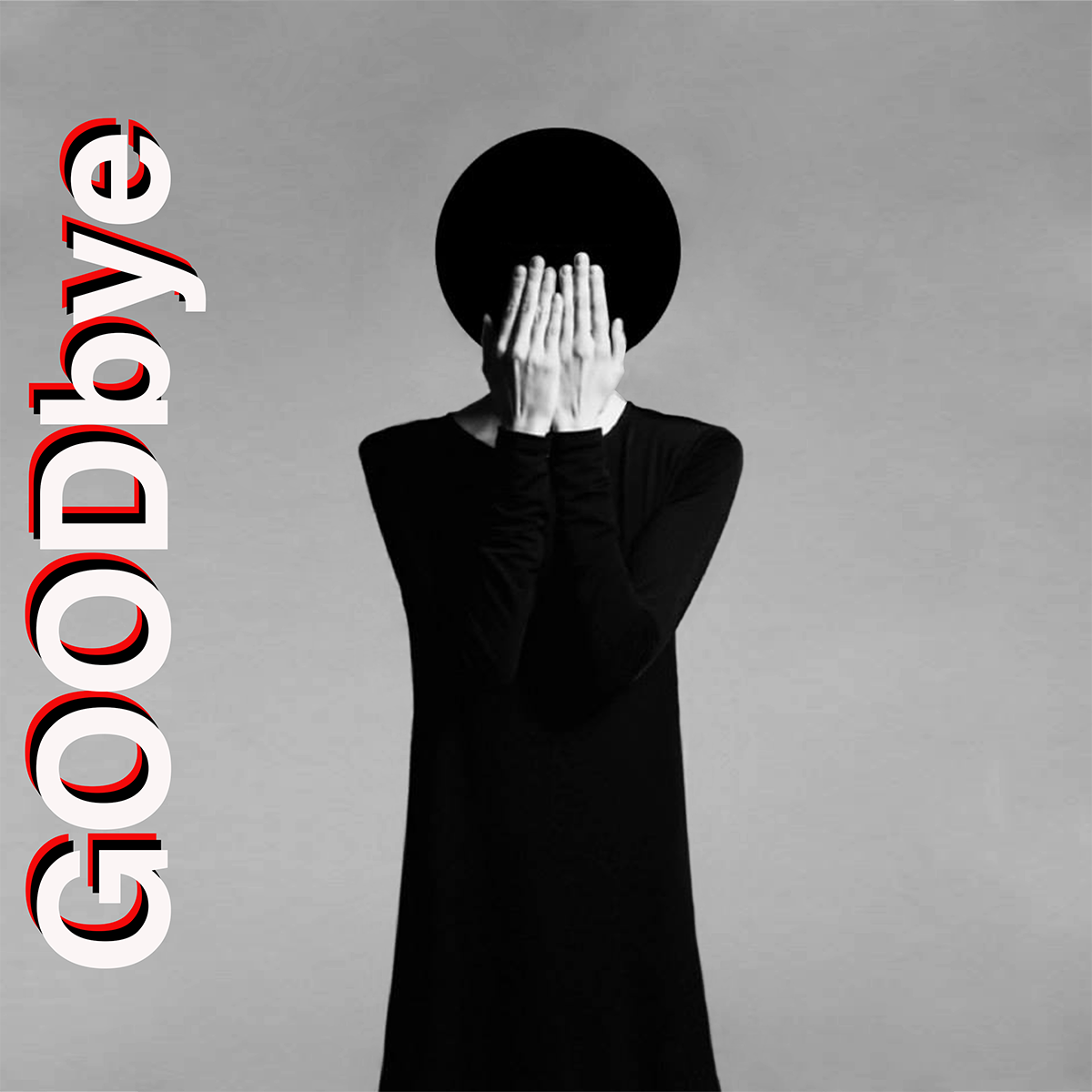
GoodBye — official album artwork · Carlos Simpson · 2023
Explore Carlos Simpson’s research, publications, creative practice and human-development work.
Carlos Simpson
GoodBye is the eighth album by Carlos Simpson, released on 26 July 2023. Across fifteen tracks, the record explores belief, memory, identity, freedom, mortality, self-awareness, relationships, resilience and the search for meaning within an uncertain world.
About GoodBye
GoodBye moves through questions that sit at the intersection of personal experience and philosophical enquiry.
Across the album, faith can guide but also confuse. Love can connect but also constrain. Memory can preserve identity while simultaneously making it difficult to move forward.
The record repeatedly returns to ideas of release: letting go of relationships, assumptions, fear, past identities and the expectation that life will always resolve into a balanced or predictable structure.
Rather than presenting certainty as the objective, GoodBye treats uncertainty as part of human experience and asks how people continue to believe, connect and create meaning within it.
Meaning & artistic background
GoodBye is organised around recurring tensions rather than a single linear story.
Spiritual language appears throughout the record alongside skepticism and philosophical questioning. Tracks such as Adonai, Elohim, Faith and The Afterlife Song consider belief from different positions rather than presenting one fixed answer.
Other works turn inward towards identity, memory, autonomy and emotional release. Inner Circle considers interdependence; Aura focuses on persistence and personal growth; Let Me Go and Let It Go confront the necessity of freedom; Inside Out asks what becomes possible when attention turns inward.
Together, these themes make GoodBye a record about transition: what must be questioned, released or transformed before something different can emerge.
Belief, doubt and the complex relationship between spiritual meaning and personal freedom.
Belonging, memory, self-awareness and the changing experience of the self.
Release from relationships, expectations and structures that restrict personal agency.
Mortality, interconnection, uncertainty and questions about what gives life meaning.
Tracklist · meanings · credits
Select any track to explore its meaning, artistic background, credits and recording information without leaving the album page.
Faith, contradiction and the search for equilibrium in an unpredictable world.
Meaning & background
Unbalanced Equation explores the conflict that emerges when faith and lived experience do not appear to correspond.
The metaphor of an equation suggests an expectation that belief, action and consequence should somehow balance. Yet human experience frequently resists that logic.
Images of floating bubbles and elastic memories reinforce the fragility and instability of existence. Actions do not always produce predictable reactions, and conviction does not always create certainty.
The song therefore becomes a reflection on the desire for equilibrium within circumstances that continually resist simple resolution.
A spiritual title associated with sovereignty, reverence and the divine.
Title & background
Adonai is a Hebrew title meaning “Lord” or “Master”.
Within Jewish tradition it is commonly used as a respectful spoken substitute for the sacred divine name represented by YHWH.
Placed within GoodBye, the title contributes to the album’s wider engagement with spiritual language, authority, belief and the relationship between human experience and ideas of the divine.
Time, memory, loss of innocence and the changing experience of belonging.
Meaning & background
Elohim reflects on time, memory and the sense that something once familiar has become unreachable.
The Hebrew title introduces a divine dimension, placing temporary human experience alongside ideas of permanence and the eternal.
Youth appears to have evaporated, secrets dissolve with passing years and belonging becomes increasingly uncertain.
The song treats nostalgia as something connected to silence: an emotional residue that can remain present even when the experiences themselves can no longer be recovered.
The result is a meditation on how time alters relationships, identity and the individual's understanding of where they belong.
Identity, belonging and the different emotional spaces people inhabit.
Meaning & background
Realm explores self-discovery, identity and the search for a meaningful place in the world.
The title suggests a space or environment, but the song extends that idea beyond geography. A realm can also be emotional, psychological or conceptual.
The individual therefore moves through different internal and external territories while attempting to understand which of them can genuinely be experienced as home.
The song's concern with belonging also challenges inherited norms and assumptions, making authenticity part of the search for one's own realm.
Identity, interdependence and the web of relationships through which the self is formed.
Meaning & background
Inner Circle is a philosophical exploration of existence, identity and interconnection.
The song considers energy, motion and relationship as fundamental aspects of experience. Even solitude remains relational: talking to oneself becomes another form of dialogue, and silence can become as psychologically present as noise.
The work also questions the idea of an entirely independent self. Human actions, memories and emotional states continually depend upon relationships with others and with the wider world.
The image of a web captures this tension. Connection sustains life, but it can also feel restrictive. Individuality and interdependence therefore coexist rather than cancel one another out.
Ageing, solitude, dreams, perseverance and the energy through which identity is expressed.
Meaning & background
Aura is a reflective and motivational song about ageing, solitude and the continuing pursuit of growth.
The title evokes the invisible energy associated with an individual — a metaphor for presence, spirit, character and potential.
The song recognises that time changes the body and the experience of life, but it refuses to equate ageing with the end of aspiration.
The recurring idea that “if you can dream it, you can make it” turns imagination into a starting point for action. Fear of failure is acknowledged, but it is countered by persistence, self-belief and the willingness to continue.
Aura therefore becomes a statement about the energy people create through their actions, dreams and relationships, even as time continues to move forward.
Transcendence, immortality, love and the desire to protect against negativity.
Meaning & background
Angel explores the tension between human limitation and the desire to transcend it.
The image of an angel represents purity, protection and a wish to move beyond the physical and emotional constraints of human existence.
The desire for immortality introduces another dimension: the possibility of observing the world without being constrained by time.
Yet the song also contains a darker impulse — the wish to absorb or remove the world's negativity. This complicates the simple image of a guardian and acknowledges that the desire to make a better world can involve sacrifice and contradiction.
Personal love remains central throughout, with the desire to remain connected beyond ordinary limits of time and space.
Autonomy, entrapment and the struggle to reclaim personal freedom.
Meaning & background
Let Me Go is a direct plea for liberation from a relationship or situation experienced as restrictive.
The image of being a “rolling stone in your shadow” suggests a life defined by another person's presence rather than one's own direction.
Repeated demands to “let me be free” intensify the sense of urgency. Freedom becomes necessary for the recovery of agency, identity and self-determination.
The awareness that time moves quickly adds existential pressure. Remaining trapped is not simply uncomfortable; it risks allowing life itself to pass without ownership.
Belief, doubt, freedom and the contradictions that can emerge inside systems of faith.
Meaning & background
Faith explores the complicated relationship between belief and personal freedom.
Faith is traditionally understood as a source of direction, but the song also considers how belief can become confusing or restrictive when it conflicts with lived experience.
The image of a “vicious circle” suggests repeated movement without resolution, while elastic memory describes how previous convictions can stretch, change and influence the present.
The desire for freedom ultimately turns the song into a search for a form of belief compatible with identity rather than one that requires identity to disappear.
The reciprocal relationship between how people interpret the world and how they act within it.
Concept & background
Behavior and Perception focuses on the relationship between action and interpretation.
Behaviour describes the actions and reactions through which an individual responds to situations. Perception describes the process through which sensory and contextual information is interpreted.
These processes continually influence one another. How a person interprets an event can shape how they respond, while the consequences of that response can change subsequent perception.
The title therefore presents human experience as a feedback loop rather than a one-way process.
Self-awareness, inner light and the transformation that begins through looking inward.
Meaning & background
Inside Out is concerned with self-awareness and the difference between external judgement and internal knowledge.
The repeated idea that seeing inside oneself could make a person “so different” turns introspection into a transformative act.
Light functions as the central metaphor. It represents clarity, hope and potential — qualities that may remain unseen when identity is judged only from the outside.
The song therefore argues that meaningful change begins through recognition of the whole self: strengths, limitations, vulnerability and possibility.
Hope, regret, perception and the tension between personal resilience and collective suffering.
Meaning & background
Folded moves between personal reassurance and awareness of a world marked by war, hunger, loneliness and uncertainty.
The repeated belief that “one day I will be just fine” operates as both affirmation and coping mechanism.
The recognition that “everything is in my mind” introduces the role of perception: the mind can provide refuge but can also intensify anxiety and regret.
A desire to travel back through time and change previous choices reveals the emotional burden of hindsight. Yet the song remains oriented towards survival rather than resignation.
Its title suggests experience folded into layers — private hope, collective crisis, regret, faith and continuing attempts to make sense of existence.
Release, emotional freedom and recognising when holding on has become restrictive.
Meaning & background
Let It Go is a meditation on the difficult act of release.
The repeated instruction to “let her go” transforms letting go into a process rather than a single decision.
The recognition that “she must be free” reframes love away from possession. Caring for someone can sometimes require allowing distance, autonomy and movement.
The repetitive structure gives the song a mantra-like quality, reflecting the way emotional detachment often requires repeated acceptance before it becomes possible.
Release therefore becomes an act of healing for both the person who leaves and the person who must stop holding on.
Mortality, skepticism, ethics and the question of what may exist beyond life.
Meaning & background
The Afterlife Song examines mortality and the fear or uncertainty associated with what may follow death.
Questions about belief are placed alongside skepticism, encouraging the listener to distinguish between inherited answers and personally examined convictions.
The repeated invitation to dance and “make it together” shifts attention from speculative certainty about the future towards the reality of the present.
The song also questions whether ethical behaviour must depend upon external religious authority, proposing intellectual curiosity and personal responsibility as alternative sources of moral direction.
Its central emphasis is therefore not an answer about the afterlife, but the importance of living consciously while life is actually being experienced.
Human connection, resilience, spirituality and finding moments of joy within uncertainty.
Meaning & background
Grit brings together resilience, connection and the search for meaning within an unstable world.
The repeated invitation to “dance with me” places joy and human contact alongside existential uncertainty.
References to a “perfect day” contrast with the vulnerability of needing another person and the desire for spiritual guidance.
Rather than defining resilience as emotional invulnerability, the song suggests that strength can include dependence, uncertainty and the willingness to continue seeking connection.
As the closing track, Grit returns GoodBye to a fundamental human proposition: even when answers remain incomplete, people can continue to connect, create and move forward.
Album information