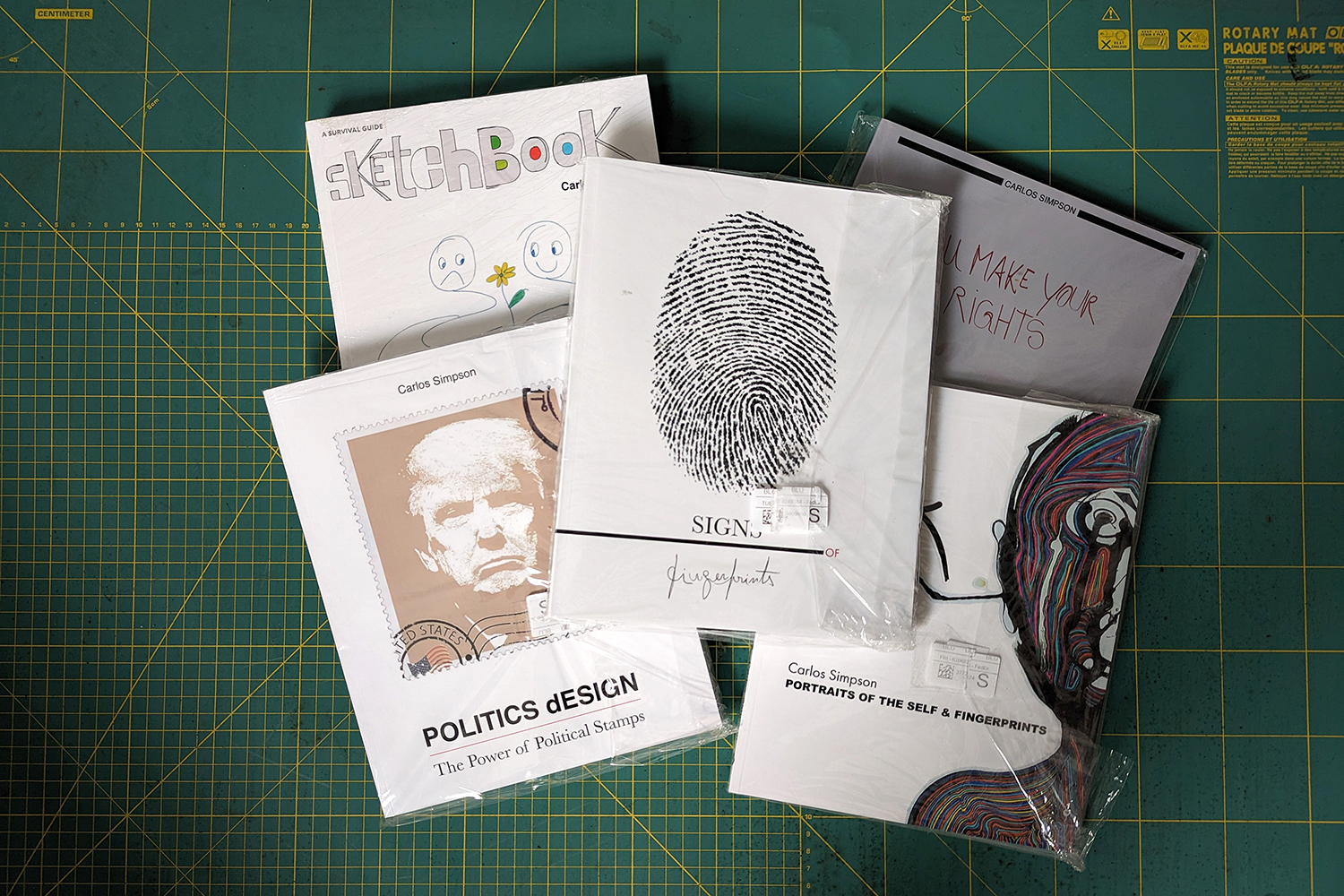
Books that leave fingerprints
Research-led publications, conceptual books, visual essays, and symbolic systems exploring identity, authorship, memory, politics, and the relationship between image and power.
Explore publications ›Carlos Simpson is a London-based multidisciplinary designer, artist, author, musician, entrepreneur and executive mentor, and founder of BE(YOU)FULL . His multidisciplinary practice connects strategic design, visual art, publishing, music, mentoring and human-development inquiry through work concerned with identity, agency, judgement, creativity, communication and the human condition.
Explore Carlos Simpson’s research, publications, creative practice and human-development work.
Carlos Simpson develops contemporary artworks, visual systems, books, and philosophical writing that examine identity, perception, technology, social structures, emotional memory, and human behaviour. His work operates across painting, conceptual art, publishing, music, and design, creating interdisciplinary connections between image, language, and experience.
Through Carlos Simpson Design Studio and the BE(YOU)FULL philosophy , his practice explores how creativity, observation, judgement, and behavioural understanding shape individual and collective human development within contemporary cultural and technological environments.
Research-led publications, conceptual books, visual essays, and symbolic systems exploring identity, authorship, memory, politics, and the relationship between image and power.
Explore publications ›
Independent music projects combining acoustic, vocal, and conceptual storytelling with themes of identity, emotion, social tension, memory, and transformation.
Explore music ›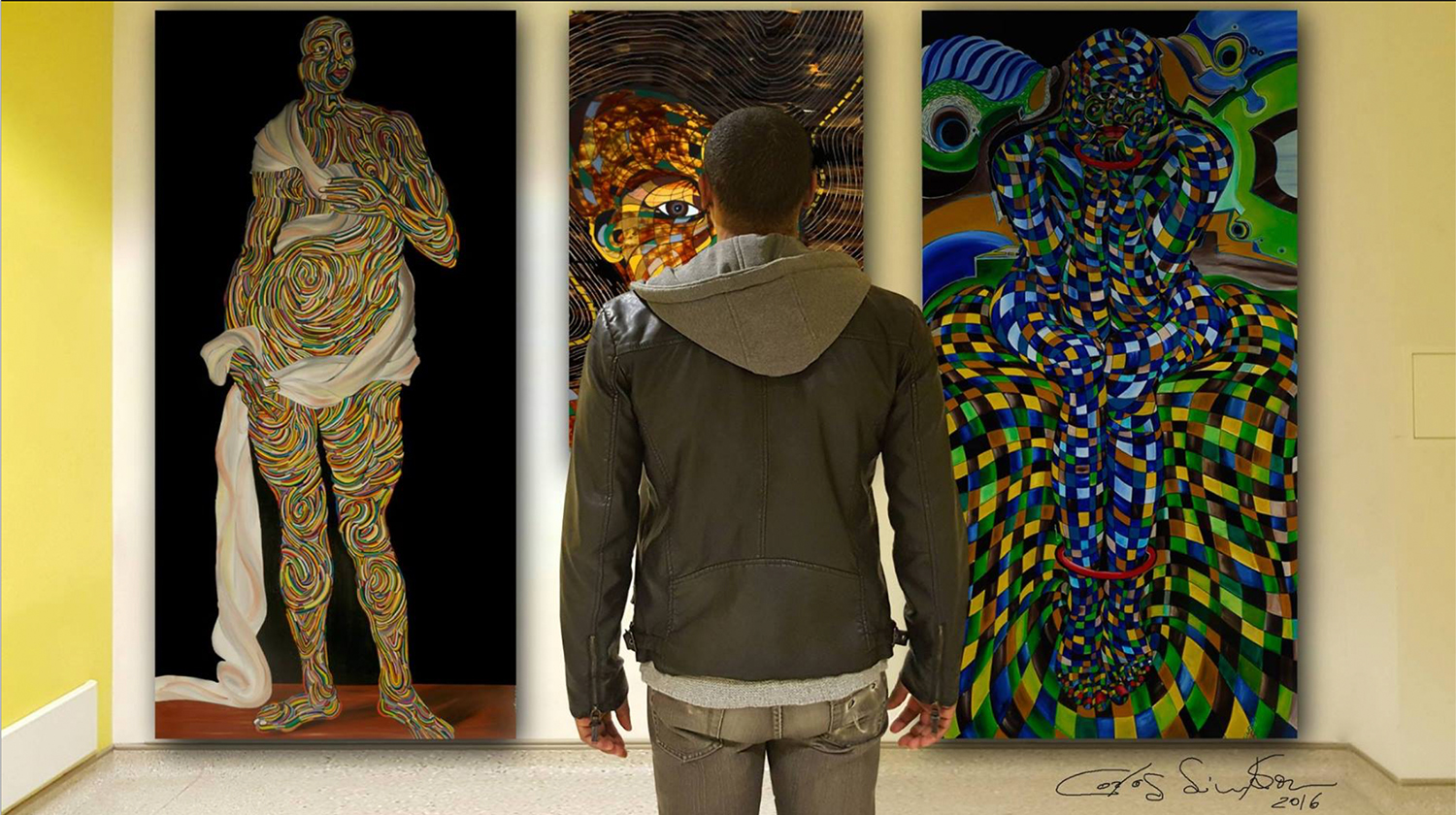
Contemporary paintings, portraits, symbolic abstractions, and fingerprint structures mapping movement, memory, emotional states, and human perception through colour and form.
Explore artworks ›Carlos Simpson moves fluently between art, design, philosophy, music, publishing, and mentoring. Each project is approached as a connected system where image, language, sound, and behaviour operate together rather than separately.
His books document fingerprints, political marks, identity structures, and visual systems. His paintings investigate memory, movement, and the psychology of the self. His essays and journal writings explore technology, authorship, behavioural influence, and the future of creativity within increasingly automated environments.
Collectors, organisations, educators, galleries, and institutions engage with Carlos Simpson when seeking work that combines visual strength with conceptual depth, human insight, and critical reflection.
Much of Carlos Simpson’s work is concerned with how people maintain clarity, authorship, and self-awareness within environments increasingly shaped by speed, visibility, automation, and continuous digital influence. Across painting, writing, publishing, and conceptual practice, recurring questions emerge around perception, emotional pressure, behavioural conditioning, and the fragmentation of human attention.
Rather than responding to technology through fear or nostalgia, the work examines how individuals adapt psychologically and culturally to rapidly changing systems. Themes such as performance, identity construction, originality, and conscious decision-making appear repeatedly throughout his essays, books, visual structures, and contemporary artworks.
This approach positions creativity not simply as production, but as a form of observation and critical reflection. The work encourages viewers and readers to think more carefully about influence, meaning, memory, and the invisible systems shaping modern human behaviour.
Across contemporary art, publishing, music, and visual communication, Carlos Simpson’s work examines how individuals maintain originality, emotional awareness, and critical thought within environments increasingly shaped by algorithmic influence, accelerated media, and continuous visibility. His practice investigates the relationship between observation, interpretation, identity, and behavioural response across both physical and digital culture.
Through paintings, essays, symbolic systems, and interdisciplinary creative structures, the work encourages deeper reflection on perception, memory, influence, and conscious human agency. Rather than separating art from everyday experience, the practice approaches creativity as an active method of questioning social systems, cultural conditioning, authorship, and the evolving meaning of human presence within contemporary society.
“I create work for people who refuse to be reduced to one definition. A painting, a book, or a piece of music is never the whole story. It is an invitation to question identity, power, memory, and the structures shaping human behaviour.”