
Thank you for reading this post; don't forget to subscribe!
Reflections on art, identity and what collectors are really seeing
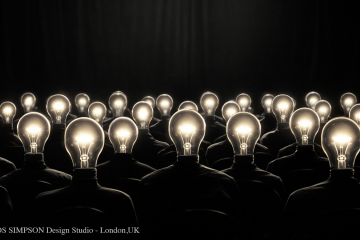
Visibility is easy. Expression is not
Britain speaks confidently about creativity. The language is familiar: innovation, originality, cultural influence, economic value. Art is praised when it is visible, successful, discussed and circulated. Yet the deeper conditions that make genuine expression possible are becoming harder to protect.
That tension sits behind much of my work.
We now live in a culture that makes visibility easy and expression difficult. Images move quickly. Recognition travels quickly. Opinion travels quickly. Reflection does not. What takes longer is the formation of a voice that is not adjusted for approval, shaped for circulation or softened for acceptance.
That difference matters in art.
A work can be visible without being revealing. It can be polished without being truthful. It can attract attention without carrying much interior life. For me, the question has never been whether an image can be seen. The harder question is whether it has been made from a real encounter with thought, tension, memory or perception. That is where the life of a work begins.
Art begins where performance fails
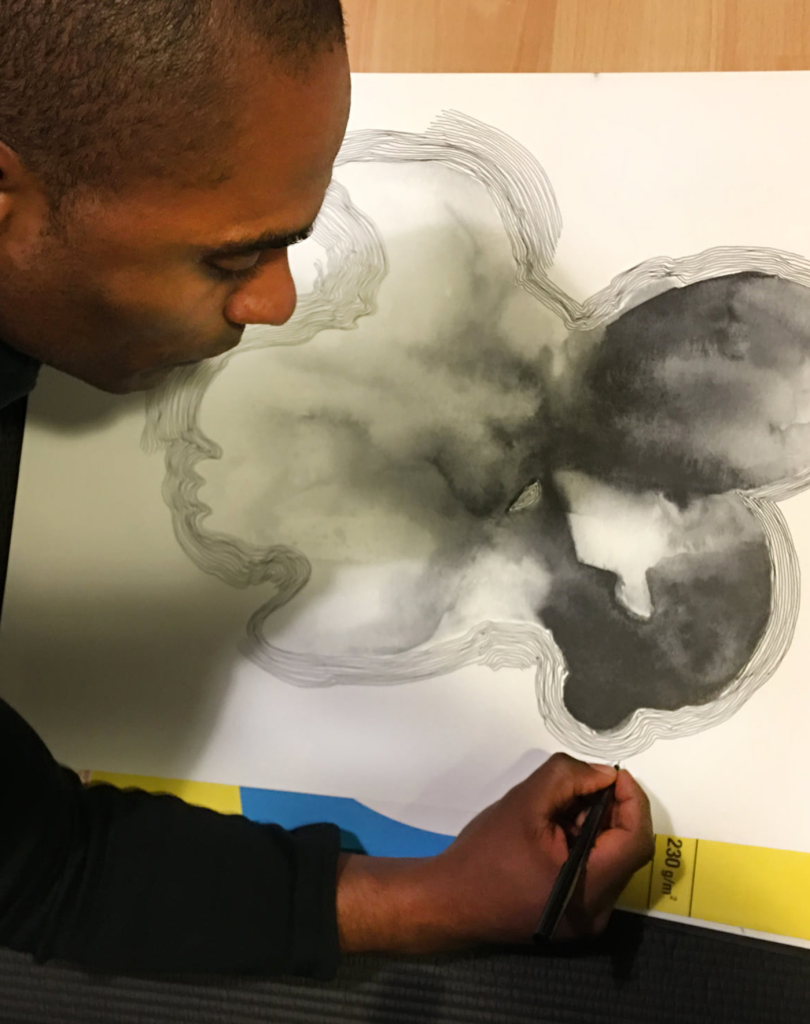
Art, at its strongest, does not start in performance. It starts earlier than that and deeper than that. It begins in attention, in uncertainty, in the quiet pressure of trying to remain with something not yet fully resolved. Before a work becomes an object, it is often a problem, a feeling, a contradiction, or a presence that has not yet found its form.
The process cannot be rushed without cost.
Collectors often respond first to surface, atmosphere, composition and force. That is natural. A work must hold the eye. But the works that continue to matter usually do something else as well. They hold attention because they carry structure underneath the image. They have lived through revisions. They have resisted the temptation to become merely decorative. They do not simply perform meaning. They contain it.
This is one reason I remain preoccupied by the drift from self-expression to self-presentation.
The two are not the same. Self-presentation is strategic. It anticipates an audience and adjusts itself. It asks how a thing will be received. Self-expression is more exposed. It is slower, less tidy, less guaranteed. It may not flatter its maker. It may not even make complete sense at first. Yet it remains closer to authorship. It carries risk. It asks something of the person making it.
You can often feel that difference in a painting.
The gaze, the image and the edited self
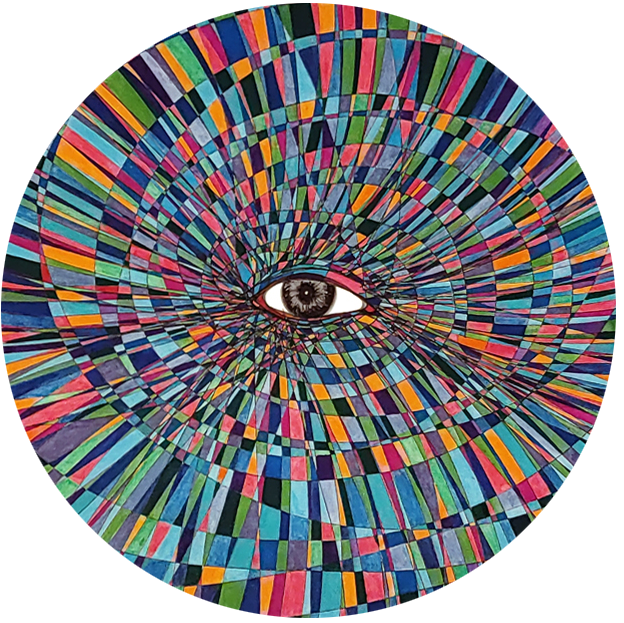
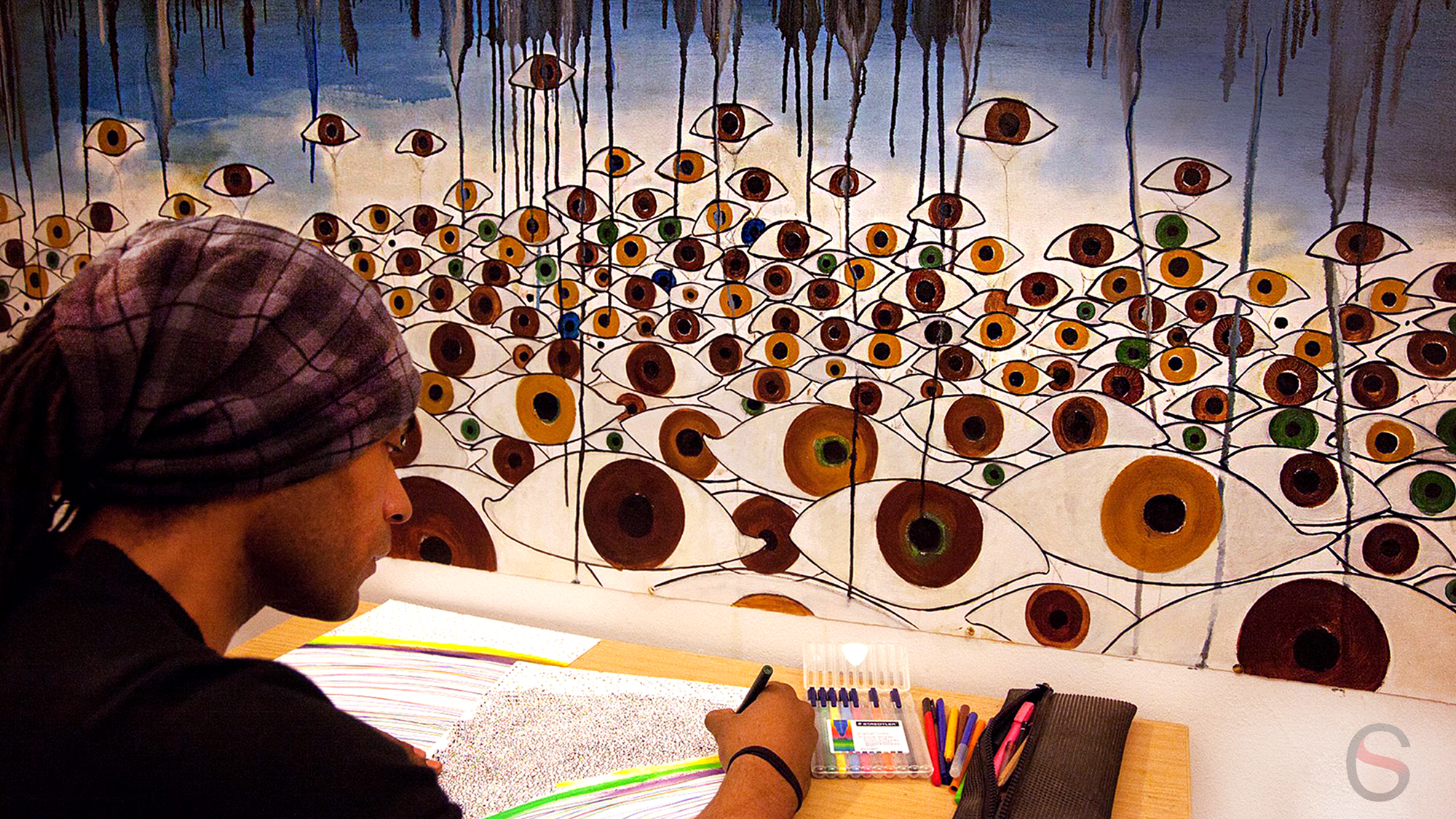
In my own practice, eyes recur because observation is never neutral. Being seen can be intimate, but it can also be controlling. A gaze can recognise, but it can also press, judge and define. That tension interests me because it belongs not only to portraiture or figuration but also to contemporary life itself. We inhabit an enlarged field of vision: social, cultural, and algorithmic. We are looked at and often learn to anticipate that gaze before we have even decided what we want to say.
Over time, that changes people. It changes how they speak, how they compose themselves, how they edit what is shown and what is withheld. It also changes how art is read. We are encouraged to consume images quickly, to recognise them quickly, and to classify them quickly. Serious art asks for another kind of looking. It asks for time. It asks for patience with ambiguity. It asks for a willingness to remain with what has not yet been fully explained.
That is one of the reasons I continue to believe that art matters beyond fashion, market cycles or cultural noise.
A strong artwork does not merely decorate a room. It alters the room. It changes the rhythm of attention within it. It introduces pressure, stillness, disruption or memory. It asks to be returned to. It reveals itself in stages. For a collector, this matters. The value of a work is not exhausted by its first impression. In many cases, the first impression is the least interesting thing about it.
What continues to matter is depth. What remains with you is not simply appearance but the presence underneath it.
What collectors are really seeing
This is also why I resist reducing creativity to output. Creativity is not only the production of objects. It is also a way of seeing, testing, revising and staying with uncertainty long enough for something more exact to emerge. In that sense, artistic practice is inseparable from identity. It is one of the places where a person moves from imitation towards authorship.
Without those conditions, the expression narrows.
That narrowing is visible far beyond the studio. Many people now become fluent in display long before they become fluent in reflection. They know how to produce an impression. They know how to manage visibility. What is less often protected is the slower work of developing judgement, a voice and interior clarity. The consequences are cultural as much as personal. We end up surrounded by images and short on meaning.
For artists, the challenge is to resist that flattening. For collectors, the challenge is different but related: to recognise when a work has genuinely emerged from a serious process of seeing and when it has merely adapted itself to the expectations of the moment.
That distinction is not always immediately visible. It often reveals itself over time.
An artwork that has been honestly made usually contains a certain resistance. You do not surrender everything at once. It does not explain itself too quickly. It leaves space for a return. It allows the viewer to discover a relationship to it, rather than simply consume it. These are not minor qualities. They are part of what gives a work longevity.
This is where collecting becomes more than acquisition.
To collect well is not only to purchase tastefully. It is to recognise authorship, to live with complexity, and to value work that continues to unfold. It is to choose pieces that do more than match a wall or complete a scheme. It is to choose works that carry thought, tension and human residue. Works that ask something back from the viewer.
That’s the kind of work I care about making.
My interest has never been in producing images that simply behave well in public. I am more interested in what remains unresolved, what sits underneath appearance, and what becomes visible only when the surface starts to give way. That is why questions of identity, scrutiny, beauty, vulnerability and perception continue to return in my practice. They are not themes applied from outside. They are part of the structure of the work itself.
Why this matters now
Self-promotion is rising. Self-expression is disappearing.
In art, that sentence feels especially urgent. Not because visibility is wrong, but because visibility has become too easy to confuse with value. Once that happens, expression starts to serve performance, and meaning starts to serve circulation.
Art can still interrupt that logic.
It can slow the eye down. It can return a viewer to depth. It can restore complexity in a culture that prefers speed. It can remind us that being seen is not the same as being known and that what matters in a work is not only how it appears but also what kind of truth it is able to hold.
That, for me, is where the real work begins.
Selected reading
Bandura, A. (1997). Self-Efficacy: The Exercise of Control. W. H. Freeman.
Bergagna, E., & Tartaglia, S. (2018). “Self-esteem, social comparison, and Facebook use.” Europe’s Journal of Psychology, 14(4), 831–845.
Cultural Learning Alliance. (2025). Report Card 2025.
Department for Culture, Media and Sport. (2025). Creative Industries Economic Estimates 2024.
Education Endowment Foundation. Arts Participation Toolkit.
Goffman, E. (1959). The Presentation of Self in Everyday Life. Doubleday.
OECD. (2013). Art for Art’s Sake? The Impact of Arts Education.
OECD. (2024). Social and Emotional Skills for Better Lives.
Shannon, H., Bush, K., Villeneuve, P. J., Hellemans, K. G. C., & Guimond, S. (2022). “Problematic social media use in adolescents and young adults: systematic review and meta-analysis.” JMIR Mental Health, 9(4), e33450.
Extended Version Available
This essay continues on Medium with additional analysis on platform dynamics, algorithmic amplification and creator strategy.
Read the extended version on Medium