Thank you for reading this post; don't forget to subscribe!
Creativity is no longer defined by production. It is defined by selection.
We have entered a condition where output is abundant. Images, text, sound, and code can be generated instantly and at scale. The constraints that once shaped creative practice and the ability to produce have been removed. What remains is a different, more demanding problem: what to choose, what to refuse, and what to stand behind.
This is not a minor shift. It is structural.
Under these conditions, creativity risks becoming performance.
Not in the sense of expression, but in the sense of output designed for visibility, speed, and continuous presence. Work is produced to be seen, circulated, and replaced rather than to hold position.
This is where the distinction emerges: creativity that performs, and creativity that decides.
For decades, creative work was evaluated through craft, execution, and the capacity to bring something into existence. That model assumes scarcity. It assumed that producing an image, a composition, or a system required time, labour, and specialised skill. Today, those assumptions no longer hold in the same way. Production has been decentralised. Generation has been automated. The volume of available output has expanded beyond what any individual or institution can meaningfully process.
In this context, creativity moves away from making and towards judgement.
Judgement is not preference. It is not taste in its superficial sense. It is the ability to define relevance under conditions of excess. It requires the capacity to filter, to position, and to take responsibility for what is brought forward. Without judgement, abundance collapses into noise.
This is where the role of the artist becomes more exacting.
The artist is no longer distinguished by the ability to produce an image. The distinction lies in the ability to decide which image matters, why it matters, and how it should exist in relation to everything else. The work is not on the surface. The work is the sequence of decisions that produces that surface.
In my own practice, this has never been separate from the image itself.
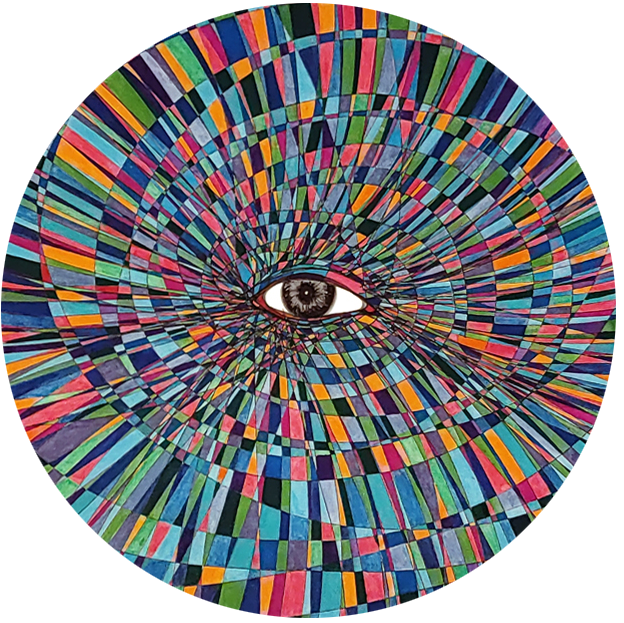
The paintings are not exercises in representation. They are constructed through tension. Between clarity and distortion. Between presence and fragmentation. Between what is visible and what resists being resolved. Each decision, colour, form, interruption, or omission, is part of a process of defining meaning rather than illustrating it.
This becomes more critical as the surrounding environment accelerates.
When systems can generate thousands of variations in seconds, variation loses value. Novelty loses value. Even technical precision begins to lose value. What remains is the ability to hold a position. To decide that this configuration, and not another, is the one that carries weight.
That decision cannot be outsourced.
This is where identity and self-awareness become central to creative practice.
Without clarity of self, there is no filter. Every option appears equally viable. Every direction competes on the same level. The result is either paralysis or imitation. Work becomes reactive, shaped by external signals rather than internal coherence.
Self-awareness, in this context, is not introspection for its own sake. It is operational. It defines the criteria by which decisions are made. It determines what is accepted, what is rejected, and what is developed further. It allows the artist to remain consistent without becoming repetitive and to evolve without losing authorship.
Without a filter, there is no judgement.
Without judgement, there is no authorship.
Authorship is the point at which creative work becomes accountable.
Systems can generate. They do not take responsibility. They do not stand behind their decision. They do not carry consequences. The artist does. The act of choosing, of committing to a direction in full awareness of alternatives, is what defines the work as authored rather than assembled.
This reframes the future of creative practice.
The question is no longer how to produce more. It is how to produce with precision. Not in terms of technical execution alone, but in terms of conceptual clarity and intentionality. The volume of output surrounding the work increases the need for coherence within the work.
In this sense, creativity becomes closer to leadership than to production.
It requires the ability to navigate complexity, to operate under uncertainty, and to define direction where there is no clear path. It requires discipline. It requires restraint. It requires the capacity to say no, repeatedly, in order to make a single decision hold.
This does not reduce creativity. It sharpens it.
This defines the difference between dead and alive creativity.
Dead creativity performs. It produces continuously, adapts instantly, and dissolves into the flow of output. It is visible but not anchored.
Alive creativity decides it. It selects, commits, and holds position under pressure. It does not compete on volume. It competes on meaning.
The future of art is not more creation.
It is more precise authorship.
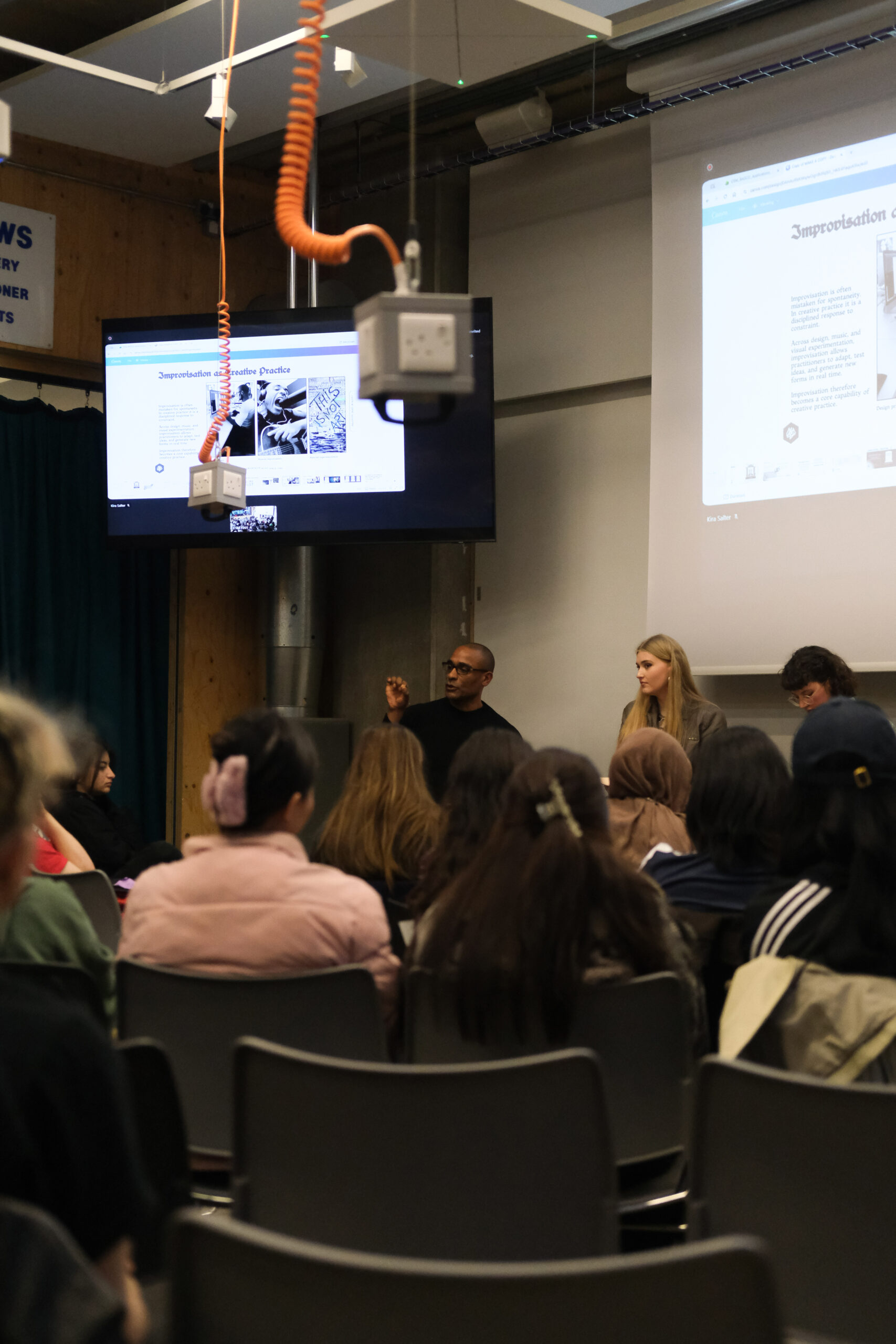
A record of the live discussion at Central Saint Martins is available here